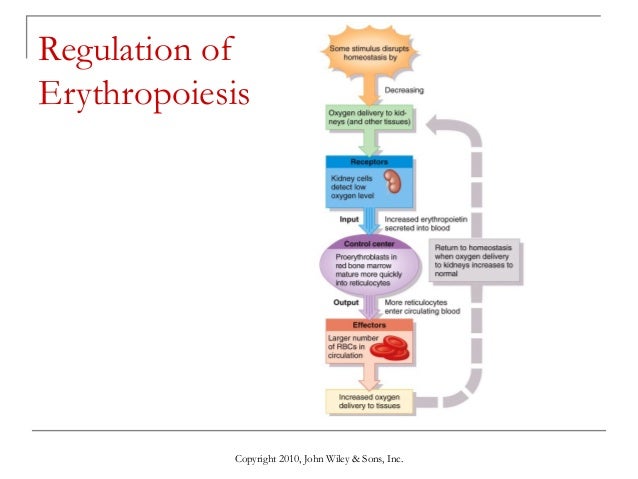
Erythropoiesis is
the process which produces red blood cells (erythrocytes). It is stimulated by
decreased oxygen in circulation, which is detected by the kidneys, which then
secrete the hormone erythropoietin. This hormone stimulates proliferation and
differentiation of red cell precursors, which activates increased
erythropoiesis in the hemopoietic tissues, ultimately producing red blood cells.
In postnatal birds and mammals (including humans), this
usually occurs within the red bone marrow.
In the early fetus, erythropoiesis takes place in the
mesodermal cells of the yolk sac. By the third or fourth month, erythropoiesis
moves to the liver.
After seven months,
erythropoiesis occurs in the bone marrow. Increased level of physical activity
can cause an increase in erythropoiesis.
However, in humans with certain diseases and in some animals, erythropoiesis
also occurs outside the bone marrow, within the spleen or liver. This is termed
extramedullary erythropoiesis.
The bone marrow of essentially all the bones produces red
blood cells until a person is around five years old. The tibia and femur cease
to be important sites of hematopoiesis by about age 25; the vertebrae, sternum,
pelvis and ribs, and cranial bones continue to produce red blood cells
throughout life.
 |
| the negative feedback regulation of aerythropoiesis |


